
Get three quotes for a new deck and you’ll often end up with three very different numbers, even when the boards in the photos look almost the same. It’s one of the most common frustrations homeowners run into, and it’s a fair question: why the gap?
The short answer is that price reflects what’s inside the board, how it’s made, its size and profile, what the installation involves and what the supplier actually includes in the quote. The cheapest figure on paper isn’t always the cheapest deck once it’s built and has been lived on for a few years.
If you’re weighing up composite decking Melbourne offers plenty of choice, and knowing what drives the price makes those choices much easier to compare. Here’s what’s behind the difference.
1. What Goes Into the Board?
Materials are one of the biggest cost drivers. Composite decking blends wood fibre with plastic and additives such as UV stabilisers and colour pigments, but every manufacturer has its own recipe. Some use reclaimed timber and recycled plastic, while others use a different mix of recycled and virgin material.
That recipe affects:
-
How well the board resists moisture and everyday wear
-
How stable the colour stays in strong sun
-
Strength and long-term durability
-
How much upkeep it needs
-
Its environmental footprint
A lower price doesn’t automatically mean a weaker board, and a premium price doesn’t guarantee a better one. Compare technical specifications, test results and warranty terms rather than the price tag alone.
2. Does Board Size and Profile Change the Price?
Yes. Composite boards come in different widths, thicknesses, lengths and profiles, and each choice affects how much material goes into a board and how the deck is built.
Solid boards, for instance, use more material than hollow-profile boards, which can push the price up. That said, thickness alone doesn’t tell you how strong or suitable a board is. Profile, recommended joist spacing and intended use matter just as much.
Size also affects waste. Longer boards can mean fewer end joins on bigger decks, and wider boards change both the look and how quickly the deck goes down. Instead of comparing price per board, compare the total cost of the quantity your design needs.
3. How Much Does Manufacturing Add?
Every composite board goes through blending, extrusion, cooling and finishing. Some products then get extra treatment, such as a protective cap layer, a textured surface or a specialised coating. Each step adds cost.
Where the board is made plays a part too. Imported decking carries shipping and distribution costs, while locally made boards have their own production expenses, so “made in Australia” doesn’t automatically mean cheaper or dearer. What it can mean is easier access to samples, stock and product advice. Weigh manufacturing location alongside specifications and support.
4. Why Do Installation Costs Differ So Much?
For many projects, labour and structure make up a big share of the budget. A simple rectangle laid over a sound existing frame will cost far less than a multi-level design that needs new framing.
Things that push installation costs up or down include:
-
Deck size and shape
-
How easy the site is to access
-
Ground preparation
-
Framing and structural work
-
Stairs, edging and finishing details
-
Overall complexity of the job
A sloping or uneven block may need extra footings and groundwork, and an old frame that isn’t fit for composite boards may have to be replaced before anything else happens.
Can You Install It Yourself?
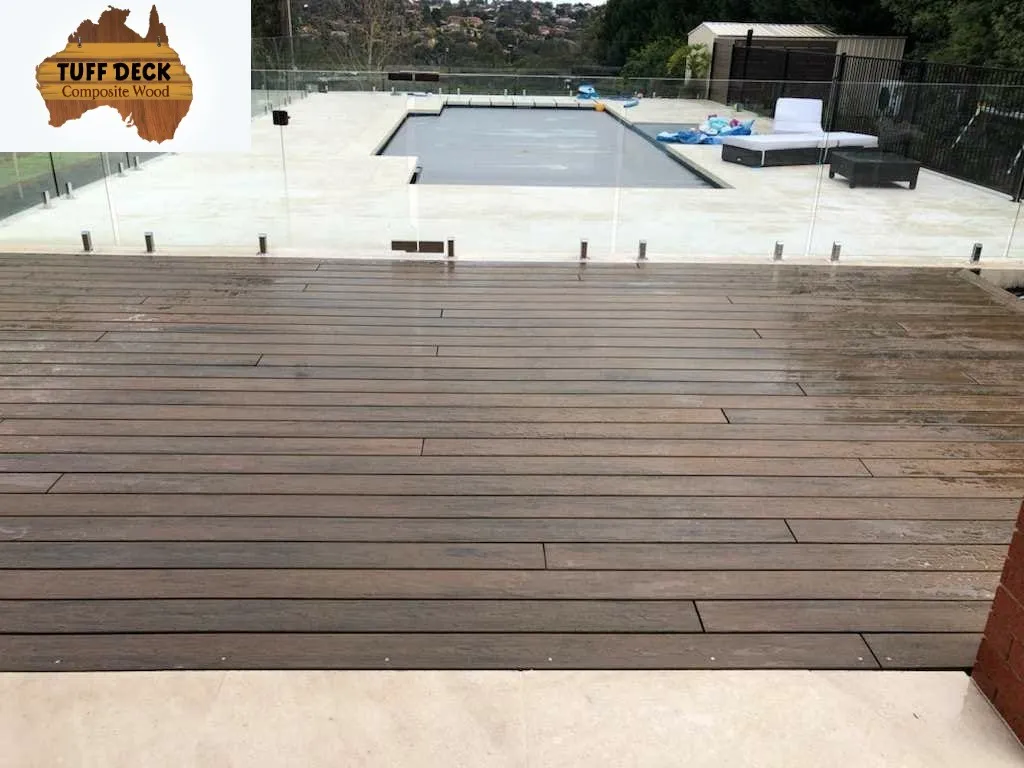
Handy homeowners can sometimes tackle a straightforward low-level deck. Composite boards still need the right structural support, airflow, drainage and expansion gaps, though, and getting those wrong can cause problems later. For raised decks, complex layouts or anything that needs a building permit, a professional installer is the safer choice. Either way, follow the manufacturer’s instructions and local building rules.
5. How Does Quality Affect What You Pay Over Time?
The purchase price is only the start. When you research composite decking Melbourne price ranges, factor in maintenance, the chance of repairs and how the product is likely to perform over the years.
Timber decks typically need regular oiling, staining or painting, depending on the species and finish. Composite skips most of that, though it still needs sweeping and an occasional clean.
Is Expensive Decking Always Better?
Not necessarily. A higher price can reflect extra features, higher production or distribution costs, or broader warranty cover, but it doesn’t promise better performance in every backyard. A fairer comparison adds the upfront cost to expected maintenance and potential repairs over several years. That paints a much clearer picture of real value.
6. Do Colour and Finish Make a Difference?
They can. Some colours and textures involve extra manufacturing or finishing steps, so a specialised surface may cost more than a standard one. Most ranges include timber-look tones, modern greys and deeper shades.
Colour shouldn’t be the only deciding factor, though. Think about how the deck will sit with your home and how it’ll cope with its spot in the garden. Darker boards can get noticeably hotter in full sun, which is worth raising with your supplier if the deck sits in an exposed spot or beside a pool. Ask for samples so you can compare colour and texture in natural light before you commit.
7. Why Are Quotes So Hard to Compare?
Even when two suppliers offer similar products, their quotes may cover very different things. One might price boards only, while another includes clips, screws, edging and delivery.
When you’re comparing composite decking suppliers Melbourne homeowners can trust, ask each one for an itemised quote that shows:
-
Boards and quantities
-
Clips, screws and other fixings
-
Edging and finishing trims
-
Delivery
-
GST
-
Installation, if included
Also check whether framing is part of the price. Lining up like-for-like products and inclusions is the only way to spot genuine value rather than just the lowest headline figure.
8. What Should You Know About Warranties?
Warranty terms vary widely. Some cover manufacturing defects only, while others include specific performance conditions. Before you buy, ask how long the warranty runs, what it excludes and how claims work. Installation methods and cleaning habits can affect whether a claim is accepted, so get the documentation in writing and check what ongoing support the supplier offers.
Why Choose Us at Tuff Deck?
We’re a Melbourne-based manufacturer and supplier of wood-plastic composite products for outdoor spaces. Our range covers composite decking, fencing, screening, wall cladding and installation accessories, so your whole project can come from one place.
Here’s what you can expect when you work with us:
-
Made in Melbourne: Our decking is manufactured locally, so you deal directly with the people who make it.
-
Recycled materials: Our boards are made from reclaimed timber and recycled plastic, giving waste a second life.
-
Colour choice: A range of finishes to suit both modern and traditional homes.
-
Custom sizing: Options for projects with specific length or dimension requirements.
-
Clear product information: Specifications and installation guidance so you, your builder or your installer can plan properly.
-
Quotes built around your project: Homeowners, builders and renovators can request a quote based on their own requirements.
Planning a new deck, fence or screen? Send us your plans and we’ll help you work out what you need.
Frequently Asked Questions
Is composite decking more expensive than timber?
Composite often costs more upfront than many timbers, but it avoids the regular oiling and staining timber needs, which can narrow the gap over the life of the deck.
How can I compare composite decking quotes fairly?
Ask each supplier for an itemised quote listing boards, fixings, trims, delivery, GST and any installation or framing, then compare like-for-like products and warranty terms.
Final Thoughts
Composite decking prices vary between Melbourne suppliers for good reasons. Materials, manufacturing, board size, installation, finishes and warranty cover all play a part. Rather than chasing the lowest board price, look at the full cost of the finished deck.
Get itemised quotes, read the specifications and understand what upkeep is involved before you buy. The best-value deck isn’t always the cheapest one. It’s the one that suits your project and keeps performing for years.
