
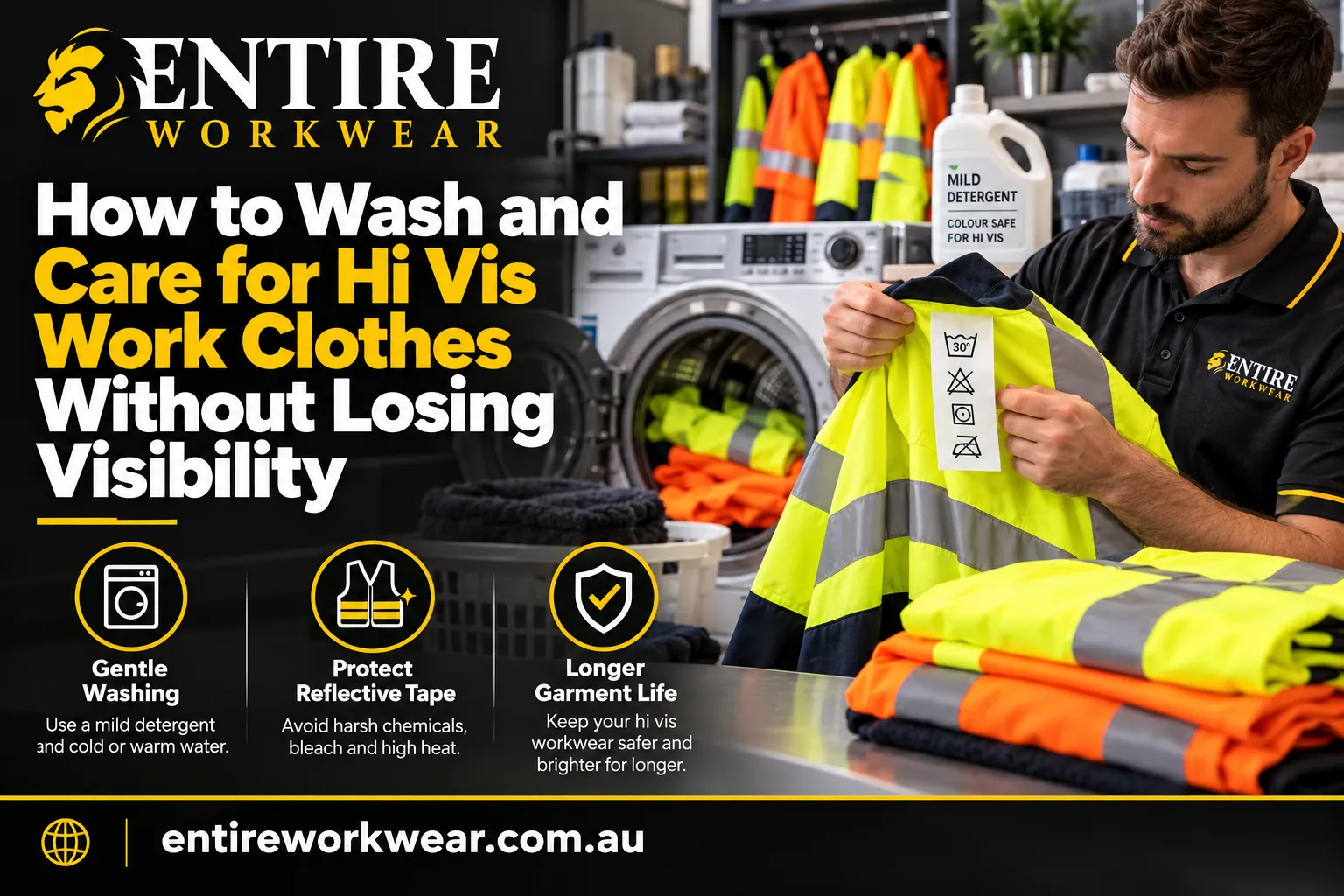
Plenty of hi-vis doesn’t wear out on site. It wears out in the laundry: a hot cycle, a splash of bleach, a long spin in the dryer and an afternoon on the line in full sun. Do that every week and a shirt that should last a good while turns dull and patchy far sooner than it should.
Whether you wear high visibility clothing every day or only for certain jobs, a simple care routine keeps the colour bright and the tape working for longer.
Start With the Care Label
Not all hi-vis is made the same. A cotton drill shirt, a polyester polo and a waterproof jacket can need very different settings, and flame-resistant garments often have their own rules. Many labels also list a maximum number of wash cycles the garment’s visibility has been tested for. Read the label once when the garment is new, and follow it from then on.
Before It Goes in the Machine
Take a minute to prep. Brush dried mud and dust off outside so it doesn’t grind against the fabric in the wash. Pre-treat grease with a little liquid detergent worked in gently, keeping away from the reflective tape. Close zips and Velcro so they can’t scratch the tape, and turn garments inside out if the label allows it.
Wash hi-vis with similar light colours, not with dark loads or heavy gear covered in buckles. Fluoro fabric can pick up dye from darker clothes and lose its brightness.
One firm rule: clothing contaminated with hazardous substances such as asbestos must never go home in the family wash. Follow your site’s laundering or disposal procedure.
Washing: Cooler, Gentler, Less
Hotter isn’t cleaner when it comes to hi-vis. Excess heat can fade fluorescent dyes and weaken the adhesive or coating on reflective tape, so use the temperature on the label rather than the hottest cycle you have.
When washing hi vis work clothes, use a mild detergent at the recommended dose. More soap doesn’t mean more clean, and leftover residue can dull the fabric and attract dirt. Skip bleach unless the label specifically allows it, and leave out fabric softener, which can leave a film over reflective tape. Don’t overload the machine either, so garments can move freely and rinse properly.
Drying and Ironing
Line drying is usually the gentlest option, but where you hang it matters. Perth’s sun is strong enough to fade fluoro on the line as well as on the job, so turn garments inside out and dry them in the shade. Only tumble dry if the label permits it, and use the low setting.
If you need to iron, check the label first, use low heat and never press directly on reflective tape. Ironing from the inside, around the tape, avoids most damage.
Storing High Visibility Clothing Between Shifts
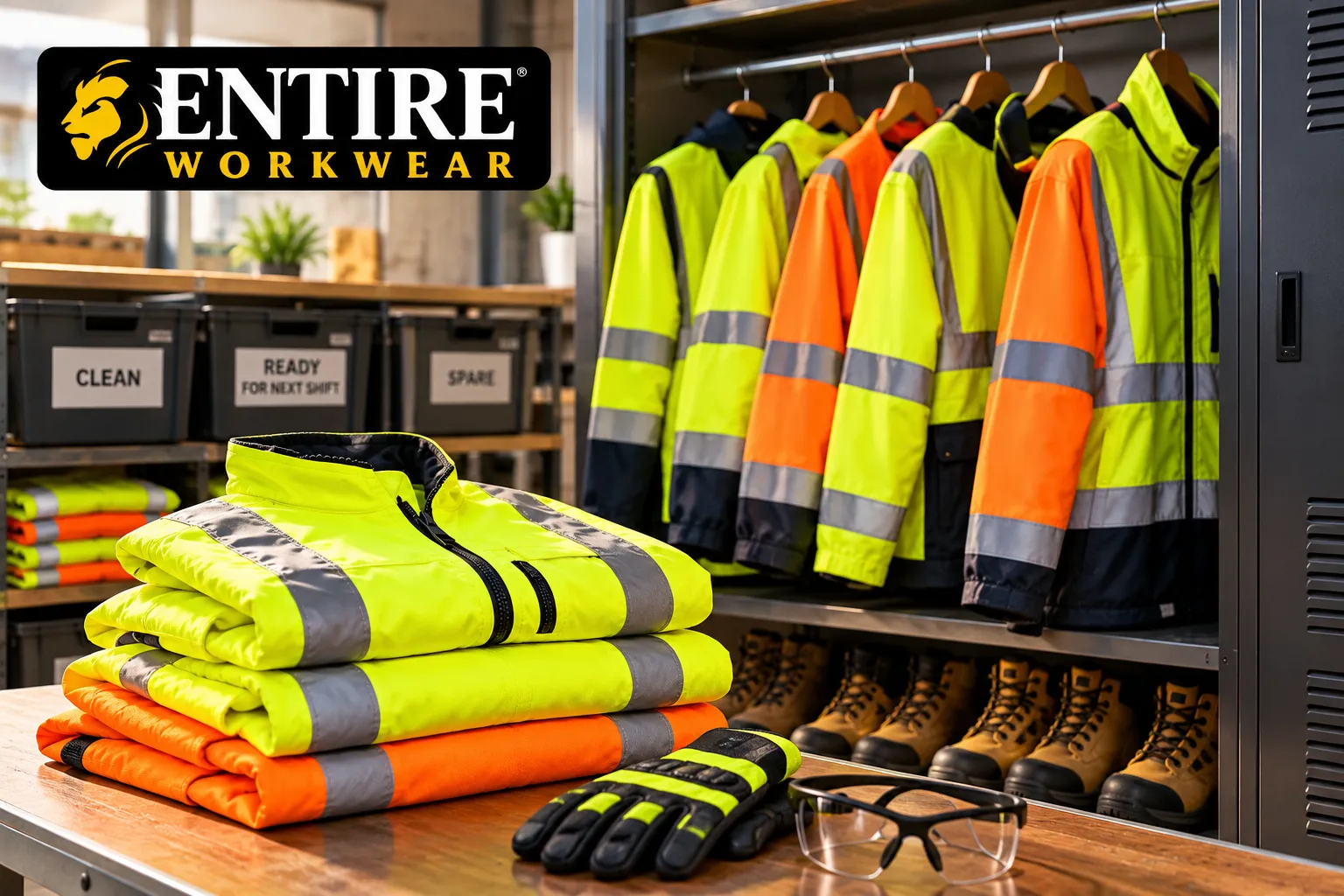
A clean shirt can still be ruined by where it’s kept. Avoid stuffing hi-vis into a damp kit bag or leaving it in a hot car for days. Hang shirts and jackets somewhere dry and shaded, away from grease, chemicals and sharp tools.
Owning two or three sets also helps. Rotating them means each garment gets washed and dried properly, rather than rushed through a hot dryer for the next morning.
When Care Isn’t Enough
Washing can’t fix faded fluoro or cracked tape. Give your gear a quick look before each shift: is the colour still bright, is the tape attached and uncracked, are the seams holding, and does the garment still meet the class your site requires? Don’t try homemade fixes like sewing on ordinary reflective tape, because that won’t restore compliance.
When a garment is past saving, choose replacement hi vis workwear that matches your site’s requirements and the season you’re working in. Entire Workwear stocks hi-vis shirts, polos, jackets, hoodies, vests and overalls, including brands such as Syzmik and Bisley, in a range of sizes and colour combinations.
Frequently Asked Questions
Can you wash hi-vis clothing in hot water?
Only up to the temperature on the care label. Heat can fade fluorescent fabric and damage the coating or adhesive on reflective tape, so most hi-vis is best washed cool to warm. Save hot cycles for garments whose labels specifically allow them.
Can I use fabric softener on hi vis workwear?
It’s best avoided. Fabric softener can leave a film on reflective tape that reduces how well it returns light, and many hi-vis care labels say not to use it. A mild detergent at the recommended dose is all most garments need.
Can I tumble dry hi-vis clothing?
Only if the care label allows it, and then on a low setting. High heat can shrink fabric, fade fluoro colours and damage reflective tape. Line drying inside out in the shade is the gentlest option for most hi-vis garments.
How do you get grease out of hi vis work clothes?
Treat it early. Work a little liquid detergent into the stain, keeping away from the reflective tape, then wash on the hottest setting the label allows. Avoid harsh solvents and degreasers. If grease still covers fluoro panels or tape after washing, the garment may need replacing.
Can I wash hi-vis with my other clothes?
Yes, with similar light colours. Keep it away from dark loads, which can transfer dye and dull fluoro fabric, and from heavily soiled or abrasive items like gear with buckles. Never mix in clothing contaminated with hazardous substances from work.
Can you iron hi-vis clothing?
Yes, if the label allows it, but use low heat and never iron directly over reflective tape. Turning the garment inside out and ironing around the tape protects it. Careful hanging after washing often removes the need to iron at all.
Final Word
Good hi-vis care comes down to a few habits: follow the label, keep the heat down, skip bleach and softener, dry it in the shade and store it properly. Do that, check your gear before each shift, and your hi-vis will keep you visible for as long as it’s meant to.
