
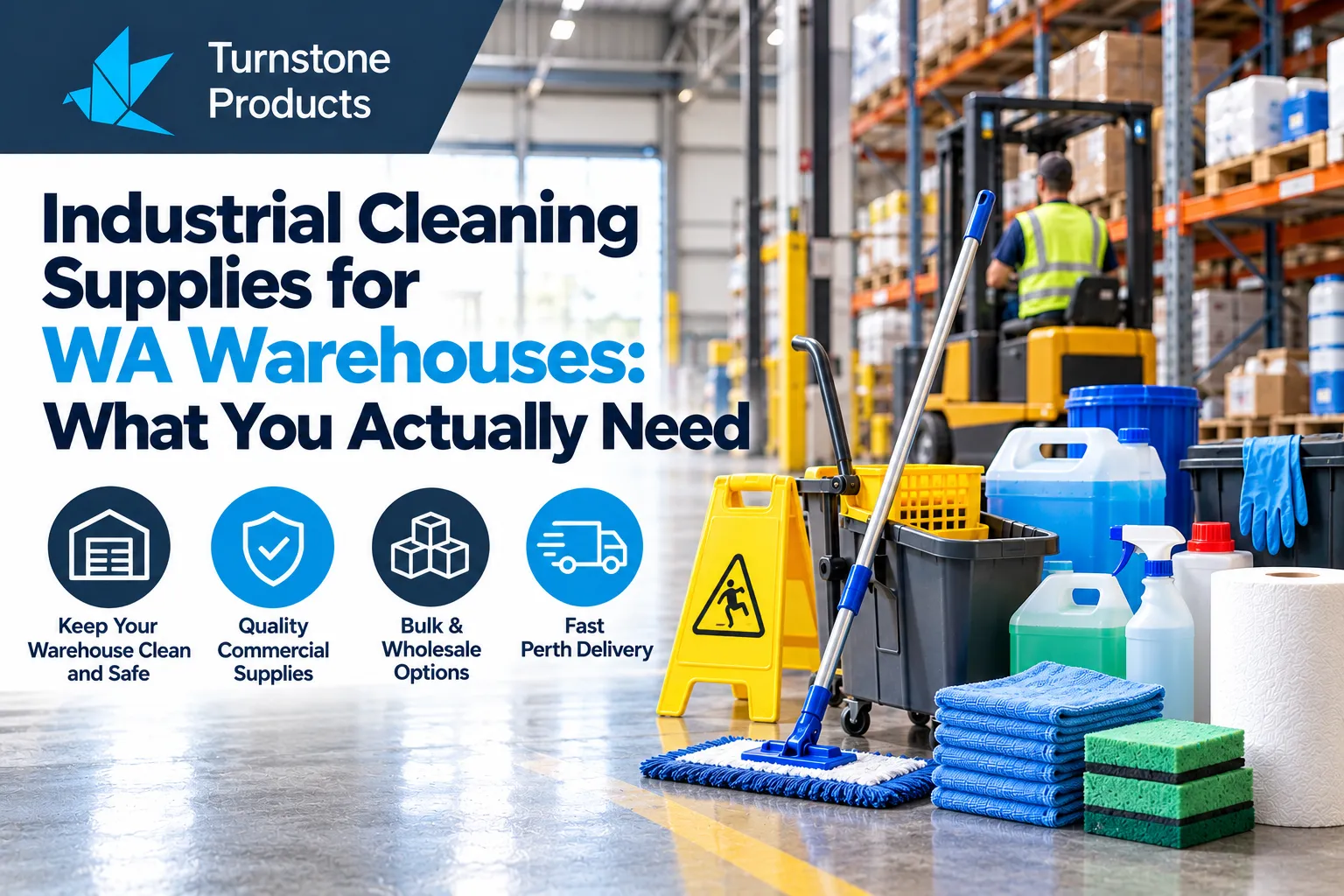
Quick answer: Most WA warehouses need five groups of industrial cleaning supplies: floor cleaning products and equipment, heavy-duty bin liners, a short set of task-specific chemicals, washroom consumables, and gloves and PPE. Choose each for the area it’s used in, and buy high-turnover items in bulk once you know your real usage.
A warehouse floor sees forklifts, pallet jacks, delivery trucks and shift workers from early morning to late at night. Add cardboard, shrink wrap, dust and the odd oil leak, and it’s a very different cleaning job from a city office.
That doesn’t mean buying every product in a catalogue. The right industrial cleaning supplies depend on what happens in each zone: the loading dock, the aisles, the packing stations, the washrooms and the lunchroom. A short list of cleaning supplies WA suppliers keep in stock covers most sites.
Floor Cleaning Products and Equipment
Floors take the heaviest punishment, and dust, tyre marks and spills all raise the risk of slips.
Match the cleaner to the floor first. Bare concrete, sealed concrete and epoxy coatings respond differently, and the wrong chemical can dull or damage a finish. If you run a ride-on or walk-behind scrubber, use the detergent its manufacturer recommends at the stated dilution. Keep a degreaser on hand for oil spots near machinery and maintenance bays.
Equipment matters as much as chemicals: wide brooms, floor squeegees, mops and buckets, and scrubbing pads that suit your surface. Where fine dust builds up, avoid dry sweeping that throws it back into the air. Use wet methods or a suitable industrial vacuum, as your risk assessment requires.
Heavy-Duty Bin Liners for Warehouse Waste
Packing stations and loading docks generate bulky, awkward waste: cardboard offcuts, plastic wrap, strapping and damaged packaging. Thin bin bags split under that load, which means double-bagging, spills and extra cleaning.
Match the liner to both the bin and the waste. A 240L wheelie bin at the dock needs a 240L liner, and loose, sharp-edged waste calls for a thicker grade. Turnstone Products, for example, stocks 240L liners in Heavy Duty (25 micron) and Extra Heavy Duty (30 micron), alongside smaller sizes down to 18L kitchen tidy bags for the lunchroom. Lighter office waste doesn’t need the heaviest grade, so reserve it for where it earns its cost.
A Short List of Task-Specific Chemicals
Most warehouses manage well with five or six chemicals, each matched to a job:
|
Chemical |
Where it’s used |
|
Floor cleaner |
Aisles, dock areas, scrubber tanks |
|
Degreaser |
Maintenance bays, oil and grease spots |
|
General-purpose cleaner |
Offices, lunchrooms, packing benches |
|
Washroom cleaner |
Toilets, basins and fixtures |
|
Disinfectant |
Areas where hygiene requires it |
|
Glass cleaner |
Office windows and partitions |
Cleaning and disinfecting are different jobs. Where disinfection is needed, follow the label’s contact time. Read each Safety Data Sheet, never mix chemicals unless the manufacturer says to, and store them away from forklift traffic, with incompatible products kept apart.
Washroom Supplies, Gloves and PPE
Large sites with rotating shifts put constant pressure on washrooms. Keep toilet rolls, hand towels and hand soap stocked in formats that fit your existing dispensers, since a mismatched towel jams or gets pulled out in handfuls.
Gloves should suit the task, not just the price. Disposable nitrile gloves cover routine cleaning, but stronger chemicals may need chemical-resistant gloves and extra PPE. Check the Safety Data Sheet and your risk assessment rather than assuming one glove fits every job.
When Bulk Cleaning Supplies Make Sense
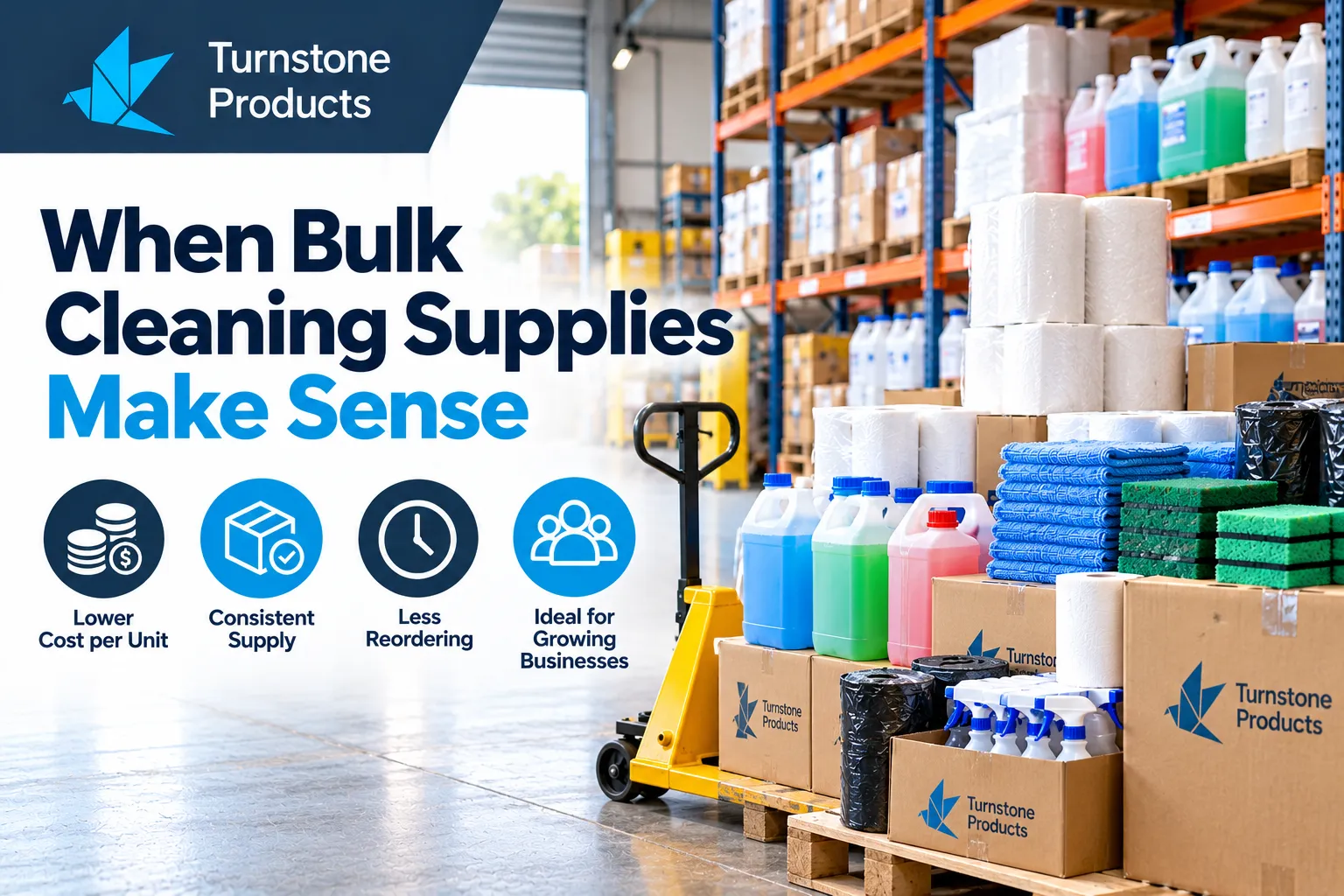
Warehouses go through the same consumables week after week, which makes bulk cleaning supplies a natural fit for bin liners, toilet rolls, hand towels, gloves and your main chemicals. Buying by the carton reduces ordering time and usually lowers the unit price.
Always compare cost per unit rather than carton price:
|
Product |
Carton cost |
Bags per carton |
Cost per bag |
|
Bin liner A |
$50 |
250 |
$0.20 |
|
Bin liner B |
$44 |
200 |
$0.22 |
Illustrative figures only, not supplier pricing.
Plenty of floor space doesn’t mean plenty of suitable chemical storage, so plan where bulk stock will live. Set a minimum level for each item and reorder before the last carton is opened.
Choosing a Supplier for Your Facility
Finding cleaning supplies WA facilities can rely on starts with a few direct questions. Do suppliers stock the liner sizes and grades you need? Are essentials held in stock, or ordered in? What are delivery times to your site, including regional WA? Can they quote for recurring carton orders?
Turnstone Products is a West Australian family-owned supplier with more than 20 years in the trade. It holds stock at its Neerabup warehouse and offers next-day delivery across Perth metro, from Yanchep to Mandurah. Its range covers chemicals, bin liners, gloves, PPE and safety products, washroom paper and dispensers, and businesses contact the team for bulk quotes. Regional sites should confirm freight times directly.
Frequently Asked Questions
What are industrial cleaning supplies?
Industrial cleaning supplies are heavy-duty products and equipment built for large or demanding sites such as warehouses, factories and logistics centres. They include concentrated floor cleaners and degreasers, heavy-duty bin liners, durable brooms, mops and squeegees, scrubber detergents, gloves and PPE, usually sold in bulk quantities.
What cleaning supplies does a warehouse need?
A warehouse typically needs floor cleaner and degreaser, brooms, squeegees and mops, heavy-duty bin liners for docks and packing areas, washroom supplies such as toilet rolls, hand towels and soap, a general-purpose cleaner for offices and lunchrooms, and suitable gloves and PPE for staff handling chemicals.
What bin liners are best for warehouse waste?
Heavy-duty or extra heavy-duty liners suit most warehouse waste, sized to match the bin. For 240L wheelie bins at loading docks, a 25 to 30 micron liner handles cardboard, plastic wrap and packaging far better than a general-purpose bag. Use the thicker grade where waste goes in loose or has sharp edges.
What is the best way to clean a warehouse floor?
Remove loose debris first with a wide broom or industrial vacuum, then wash the floor with a scrubber or mop using a cleaner suited to the surface, at the recommended dilution. Treat oil and grease spots with a degreaser before scrubbing, and let the floor dry before forklift traffic returns.
Final Thoughts
A well-run warehouse doesn’t need a storeroom full of products. It needs the right floor care, strong bin liners, a focused set of chemicals, well-stocked washrooms and proper PPE, bought in sensible bulk from a supplier that keeps stock close by.
